Every concept outlined in this section should be present in a MVP
In Citadel, both ships and outposts are customized using a layout grid system, providing a strategic and modular approach to fitting and upgrading these critical assets. This system allows players to optimize the performance and capabilities of their vessels and structures by carefully selecting and placing various modules.
Layout Grid System Overview
The layout grid system is a 2D grid where each cell represents a unit of space that can be occupied by different modules. Ships and outposts each have their own grid layouts, with varying sizes and shapes based on their type and class. Modules come in different sizes and shapes, similar to Tetris pieces, and must be strategically placed within the grid to maximize efficiency and functionality.
Fitting resources
Fitting has Four primary resources that have to be managed by the player.
- CPU and Powegrid are the ship’s computational power and capacity to transfer power
- Capacitor is the ship’s storage of power
- Generator is the ship’s ability to produce power
Ship Fitting
Ships in Citadel start as empty shells and must be fitted with equipment to become operational. The layout grid system for ships includes various hardpoints and spaces where modules can be placed. These hardpoints come in different types and sizes, determining what kind of modules can be installed.
Key Elements of Ship Fitting:
-
Hardpoints:
- Propulsion Hardpoints: Dedicated to engines and thrusters, these hardpoints are crucial for mobility and speed.
- Electronic Hardpoints: Used for sensors, communication devices, and electronic warfare modules, these hardpoints enhance the ship’s operational capabilities.
- Open Hardpoints: The most versatile, these can accommodate various modules like weaponry, drone bays, or mining equipment, and are highly valuable due to their flexibility.
-
Module Types:
- Weapons: From laser cannons to missile launchers, weapons modules are critical for combat effectiveness.
- Shields and Armor: These modules provide defensive capabilities, absorbing or deflecting incoming damage.
- Engines: Propulsion modules that determine the ship’s speed and maneuverability.
- Sensors and Communication: Essential for navigation, targeting, and coordinating with other ships or outposts.
- Utility Modules: These include cargo holds, mining lasers, and repair units, each enhancing the ship’s operational versatility.
Strategic Placement: Players must strategically place these modules within the grid, considering factors like power distribution, weight balance, and spatial efficiency. Efficient fitting can make the difference between a formidable battleship and a vulnerable target.
More in the Fitting Space section and in the Equipment State one
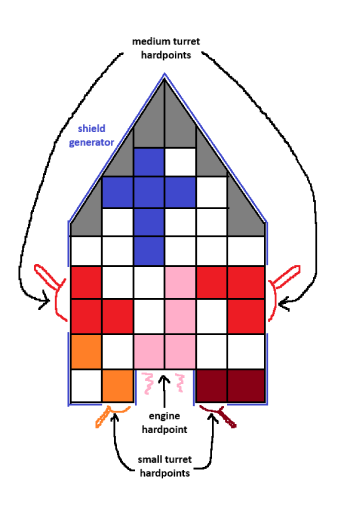
Outpost Fitting
Outposts in Citadel, including both Citadels and Temporary Outposts, also utilize the layout grid system for customization. The grid layout of an outpost determines how many and what types of modules can be installed, influencing the outpost’s capabilities and strategic value.
Key Elements of Outpost Fitting:
-
Grid Layout:
- Citadels: With larger grids, Citadels can host a wide array of modules, from extensive defensive systems to advanced manufacturing facilities.
- Temporary Outposts: Smaller grids focus on modularity and flexibility, allowing for rapid deployment and reconfiguration based on immediate needs.
-
Module Types:
- Defensive Systems: Turrets, shield generators, and anti-missile systems to protect against attacks.
- Resource Processing: Refineries and factories that convert raw materials into usable resources and equipment.
- Support Facilities: Repair docks, medical bays, and living quarters to support player operations and logistics.
- Storage: Warehouses and silos for storing raw materials, fuel, and finished goods.
- Command and Control: Modules that enhance the outpost’s operational capabilities, including communication arrays and strategic planning centers.
Players must balance space for production, defense, and support facilities is crucial to creating an effective and resilient outpost.
Gary lives in Gallente space—a place with resources that encourage blasters and armor. To his south lives Arya, with her armor and laser focused resources. To his east is Casper, a guy who has a fleet consistent of shield and missile ships. Through warfare, Gary has conquered some of Arya’s space, and has a decent supply of resources to make lasers. Lasers have an “L” tetris shape. Blasters have a “Z” tetris shape. When Gary is fighting Arya, he wants to equip his ship with the armor-piercing blasters. When Gary is fighting Casper, he wants to use the lasers.
Gary now has to make a choice: does he fit his ship in such a way that he can freely swap the “L”- and “Z”-shaped weapons, or does he make a unique fit for each that fully optimizes the fitting space? With the 12 weapon types and six tank types described in Tank and Damage Types, there are 72 different configurations a ship can take on that can be optimal depending on whom Gary is fighting. Cookie-cutter fits with so many options is not possible.